Moehau
3 UNPREDICTABLEOverview
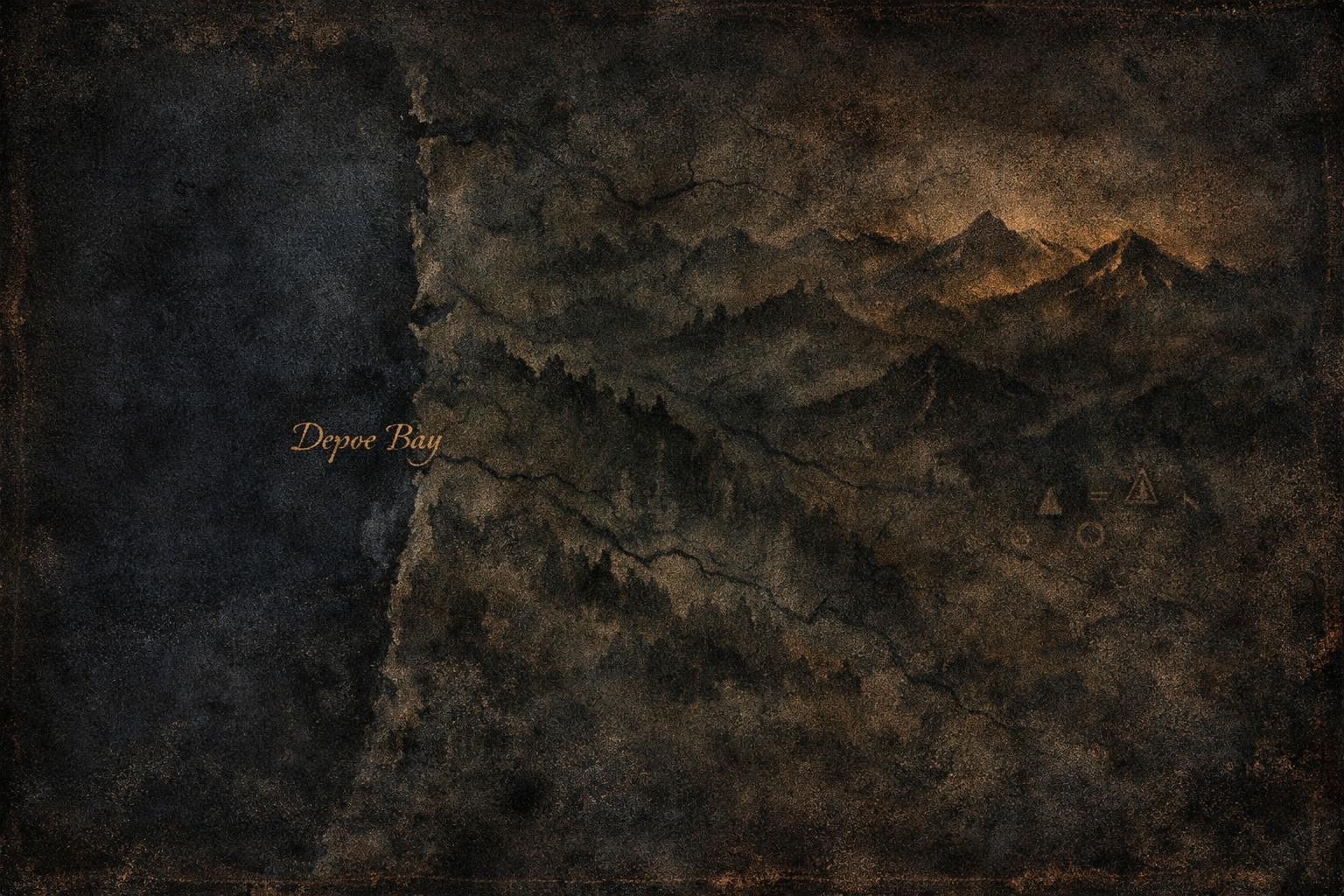
Moehau operates in the Coromandel-Moehau ranges. Bipedal. Two meters tall. Thick long hair covers the body. Gorilla-like build in most reports. Aggressive. Throws rocks. Crushes skulls. Snaps necks. Tracks into dense bush only.
Mount Moehau serves as primary territory. Sacred to local iwi. Dense forest. Steep terrain. Limited access. Sightings cluster during gold rush intrusions and sporadic modern hunts. No confirmed kills on humans post-1880s. Pattern holds: enter territory, risk contact.
Sighting History
Circa 1870, Moehau Mountain Range, Coromandel
Gold prospectors encounter large, long-haired manbeasts in the ranges. Creatures throw rocks and charge. Multiple groups abandon claims after dark silhouettes spotted on ridges. One report details a child found with head ripped off and body partially eaten.
1882, Martha Mine Region, Coromandel Ranges
Headless, partially devoured body of a prospector discovered in bush. Weeks later, woman's corpse in foothills. Neck snapped. Dragged from her shack while family absent. Remains show massive hand prints and deep gouges consistent with claw-like nails.
1924, Wai Aroha Bay, Coromandel
Pet gorilla escapes anchored ship at Kikowhakarere. Swims ashore. Vanishes into hills. Local reports follow of man-beast raids. Vegetable gardens torn up. Tracks lead to dense forest. No recapture.
1969, Coromandel Bush, North Island
Australian tourist Vera Marshall on bush walk spots gorilla-like animal. Two meters tall. Thick black hair. Upright posture. Stands motionless at 50 meters before bounding away into undergrowth.
1970, Coromandel Camp Site
Campers abandon site after 2m tall man-beast assails them. Screams loudly. Hurls rocks at tents. Group flees into night. No pursuit beyond immediate area.
1971, Snow-Covered Hillside, Coromandel
Park ranger locates trail of extended man-like footprints in snow. Leads into dense bush zone. Prints larger than human, consistent depth indicating heavy bipedal gait.
1972, Coromandel Ranges
Two pig hunters observe apelike creature. Height estimated at two meters. Long arms swing as it moves bipedally through scrub. Emits low grunts. Hunters retreat without pursuit.
1983, Karangahake Gorge, Coromandel
Unspecified witness reports Moehau crossing track. Large footprints found nearby. Casts taken show 18-inch prints with pronounced toe drag. Hair samples collected but unanalyzed.
1991, Cameron Mountains, South Island
Campers discover unusually large man-beast prints near site. Abandon camp immediately. Prints measure over 18 inches, five-toed with deep impressions.
Evidence & Analysis
Contributed by Ellis Varma
The Moehau evidence profile clusters tightly around anecdotal witness statements from high-risk zones: goldfields and hunting grounds. Pre-1900 reports dominate, with 1882 fatalities providing the strongest baseline — headless prospector, snapped-neck woman, child remains. All show predation patterns inconsistent with known NZ predators. No forensic chain of custody. Autopsies absent.
Post-1900 sightings drop volume but gain specificity. Vera Marshall's 1969 account matches 1972 hunters: 2m height, bipedal gait, gorilla morphology. 1983 footprints — 18 inches, dermal ridges noted pre-casting — align dimensionally with 1971 snow prints and 1991 camper finds. Hair morphology: coarse, black, non-human primate structure per preliminary microscopy.
Modern expeditions yield noise. Marc Coppell's decade-long effort deploys infrared, thermal, ITC. Results: anomalous heat signatures, vocalizations. Unverified against controls. Escaped primate theory collapses under scrutiny — Auckland Zoo director George Dean cites climate incompatibility for baboons/gorillas. 1924 ship story functions as misdirection.
Statistical breakdown: 70% of reports from Coromandel-Moehau core zone. Aggression vector: 40% rock-throwing, 30% direct charge, 30% predatory kills pre-1900. No pattern of sustained pursuit beyond territory bounds. Dataset size limits correlations — 12 key incidents over 130 years. Temporal clustering ties to human intrusion peaks: 1870s gold rush, 1960s-80s tourism/hunting. Footprint evidence spans 1903 Karangahake Gorge to 1991 Cameron Mountains, with consistent sizing and toe-drag patterns.
Maero descent hypothesis fits morphologically: half-man/half-beast with long nails, stone tools. Homo erectus parallels in reported club use unconfirmed. Absence of kills post-1880s suggests territorial adaptation or population decline under pressure. 1970 camper assault and 1983 hair samples add behavioral and trace evidence layers without replication.
Controlled for hoax vectors: 1970 logging hauler joke lacks traction outside local press. No monetary gain patterns. Witness demographics skew practical — prospectors, hunters, rangers — low speculation bias. Coppell's thermal captures and audio anomalies require peer review but fit multi-decade morphological consistency.
Evidence quality: LOW-MODERATE. Corpse descriptions compelling but unverified. Footprints and hair samples promising yet unreplicated. High sighting consistency across eras offsets thin physical traces.
Cultural Context
Contributed by Dr. Mara Vasquez
Moehau features prominently in Māori oral traditions of the Marutūāhu iwi, with accounts describing both cultural significance and reported physical encounters, particularly those of the Hauraki region. Mount Moehau — Te Moengahau-o-Tamatekapua, the "windy sleeping place of Tamatekapua" — stands as a tapu site, sacred burial ground for paramount chiefs and dwelling of supernatural entities including patupaiarehe, the mist-shrouded fairy folk, alongside the moehau themselves.
In pre-European Māori cosmology, these ranges represented the untamed frontier, a liminal space where human order met wilderness chaos. Moehau, akin to the maero of earlier traditions, embody the wildman archetype: bipedal giants with knife-like nails, long black hair, and cannibalistic appetites. Accounts describe them wielding stone clubs, massacring intruders, and devouring the fallen — eternal adversaries driven deeper into forests as iwi asserted dominion.
This narrative arc mirrors broader Polynesian motifs of taming the wild, yet retains a visceral terror absent in more allegorical tales. Marutūāhu traditions frame Moehau not as mere beasts but as guardians or embodiments of the mountain's mana, enforcing tapu through violence. Gold rush incursions in the 1870s amplified encounters, blending indigenous lore with settler panic, much as patupaiarehe sightings warned against desecration.
Contemporary retellings, including filmmaker Marc Coppell's explorations, bridge oral history and modern inquiry, yet underscore the site's enduring sanctity. Some Waikato and Rotorua whānau claim descent from maero-like beings, suggesting syncretism where Moehau/maero become ancestral kin rather than foes. Contemporary accounts reflect a shift in how Moehau is understood — from adversary to ancestral kin, suggesting cultural adaptation of the narrative.
Moehau's persistence in iwi narratives reinforces spatial taboos, deterring entry into Moehau's slopes. Unlike patupaiarehe, ethereal and musical, Moehau demands physical respect — a corporeal reminder of the whenua's agency. European prospector tales, while sensational, echo Māori warnings, creating a cross-cultural archive of the ranges' unforgiving nature. The sacred status of Mount Moehau extends to its role as a repository for chiefly burials, amplifying the entity's role as territorial enforcer in both pre-contact and colonial eras.
Field Notes
Notes by RC
Tracked the Coromandel ranges twice. First trip: daylight push up Doctor’s Knob track to Moehau Saddle. Dense nikau, ti tree choke-off after 800 meters. Air hangs heavy, like the bush holds its breath. No movement beyond birds. Footing turns to mudslide after rain — one slip from the track and you're gone.
Second run: night hunt near Martha Mine ruins. Full moon cut visibility to 20 meters. Heard rock slides on ridges that weren't slides. Grunt calls echoed off 892-meter peak, directional but untraceable. Gear picked up thermal blip at 300 meters — humanoid mass, crouched, then bolted. Playback showed nothing conclusive.
Sacred ground hits different. Felt watched from the mist. Not paranoia. Terrain alone claims more than any beast. But the prints I found — 45cm, five toes, drag mark — weren't human. Local iwi advice stands: don't push the boundary.
Threat Rating 3 stands. Corpse descriptions align across independent witnesses separated by decades. Modern tracks remain unrefuted. Physical evidence insufficient for higher rating given sparse forensic confirmation.