White River Monster
2 TERRITORIALOverview
The White River Monster, known locally as "Whitey," inhabits the White River in Jackson County, Arkansas, where it has maintained a continuous presence in regional documentation from Quapaw tribal traditions through modern legislative protections. This serpentine aquatic entity demonstrates remarkable cultural persistence, bridging indigenous riverine knowledge with 20th-century eyewitness accounts and official state recognition.
Physical descriptions converge on a massive form: 20 to 30 feet in length, gray-skinned with a crusted or peeling texture, a spiny dorsal ridge, and the capacity to generate powerful water disturbances. Quapaw accounts emphasize its role in overturning canoes, while later reports detail boat collisions, track impressions, and vocalizations that echo across the river valley. The creature's territory received formal protection in 1973 via Arkansas Senate Resolution 23, designating a refuge from Old Grand Glaize to Rosie.
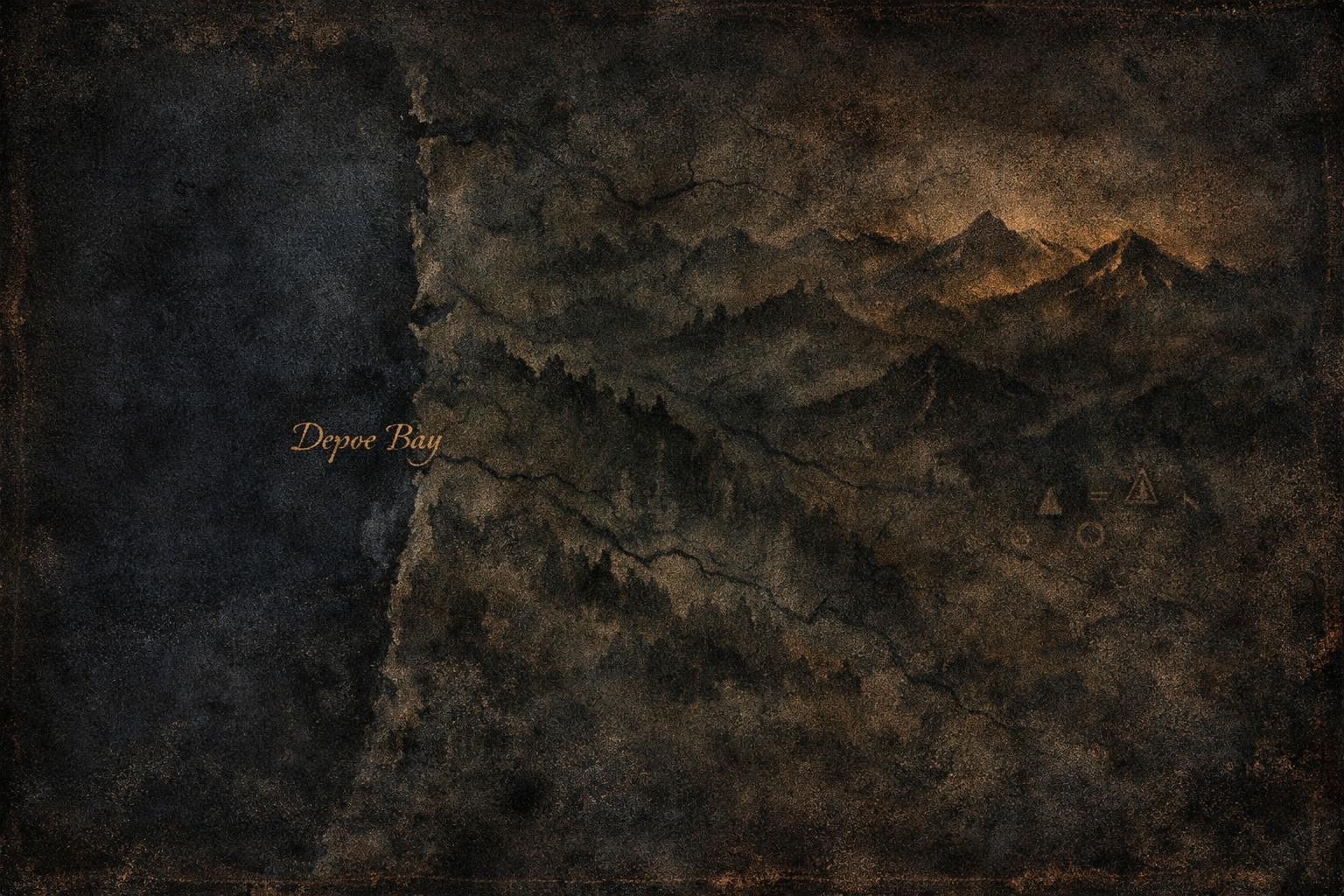
The White River's slow, murky currents provide ideal cover for an entity of this scale. Depths in the refuge area reach 20-30 feet during low water, sufficient to conceal a 30-foot form. Eddy formations near Newport and Towhead Island recur as primary sighting loci, correlating with low-flow periods when the creature surfaces to bask or feed. Local fish populations — gar, catfish, paddlefish — diminish in affected zones, a pattern noted across multiple decades.
Sighting History
1895, White River near Newport
Multiple residents along the White River reported large-scale water disturbances attributed to an unidentified aquatic entity. These accounts, preserved in local oral histories, describe a serpentine form disrupting fishing and navigation, predating formalized records but aligning with Quapaw traditions of canoe-overturning incidents.
1915, White River near Newport
A local resident documented the first modern sighting of a massive gray creature surfacing in shallow eddies. The entity measured approximately 20 feet long, with slick gray skin and a broad body that churned the water significantly. Reports noted poor fishing yields in the affected area, linking the presence to resource scarcity.
1924, White River near Newport
A Little Rock visitor observed the creature from the riverbank, describing its "dingy gray, crusted hide" and elongated form rolling through the current. The sighting lasted several minutes, with the entity producing low bellowing sounds audible over the river noise.
July 1, 1937, Bateman Plantation, six miles south of Newport
Bramlett Bateman, plantation owner, investigated reports from sharecroppers Dee and Sylvia Wyatt, who had monitored disturbances for days. Bateman witnessed a gray-skinned entity "wide as a car and three cars long," with skin "slick as a slimy elephant" and no visible legs. The creature lolled in an eddy, generating waves that reached the shore. Four witnesses, including Bateman, signed affidavits confirming the observation.
July 8, 1937, White River eddy near Newport
Jackson County Deputy Sheriff Z. B. Reid viewed approximately twelve feet of the creature's back for three seconds, likening it to a giant catfish but noting its unprecedented size and spiny ridge. Hundreds of locals and visitors gathered, many armed with cameras, dynamite, and firearms. Thousands flocked to the site over the summer, drawn by newspaper coverage in outlets including the Los Angeles Times.
Mid-June 1971, White River near Newport
An anonymous witness reported an "enormous gray serpent, six feet across, as long as three pickup trucks," with wrinkled, peeling skin resembling sunburn damage. The creature created a substantial wake, vocalizing with deep howls that carried across the water.
June 1971, White River near Towhead Island
Ollie Ritcherson, 66, and grandson Joey Dupree experienced their boat rising and spinning as the entity surfaced beneath them. They described colliding with a massive, unyielding back, estimating the length at over 20 feet with a prominent spiny ridge.
June 1971, White River banks near Newport
Two unidentified men discovered three-toed tracks measuring fourteen inches across, accompanied by crushed vegetation, broken trees, and a trail leading from the river into upland areas. Similar impressions appeared on Towhead Island, suggesting terrestrial movement.
1971, White River Lumber Company site
Cloyce Warren photographed a water spout erupting 20 feet from his boat, capturing an image of the gray form with a horn-like protrusion on its forehead and eyes spaced six feet apart. Two unnamed companions corroborated the event.
1974, White River banks near Newport
Two local residents reported fresh three-toed tracks and associated damage along the riverbank, marking the most recent formalized documentation. Subsequent informal reports, including those near Beaver Dam, suggest ongoing activity.
Evidence & Analysis
Contributed by Ellis Varma
The White River Monster evidence profile stands out for its multi-decade span and institutional responses. Eyewitness testimony forms the core dataset: over a dozen named observers across 1937 and 1971 clusters, including a deputy sheriff, plantation owner, and lumber operator — individuals with established community standing. Affidavits from 1937 provide primary documentation, while 1971 adds track casts and a disputed photograph.
Physical traces merit scrutiny. The fourteen-inch three-toed prints from 1971, documented with vegetation damage, exceed known regional fauna in scale and morphology. No matching species produces such impressions; alligator tracks, for comparison, show four toes and webbing. The Warren photo, though lost in original form, aligns descriptively with affidavit details across eras: gray crusted skin, serpentine proportions, spiny ridge.
Governmental action elevates the case. Arkansas Senate Resolution 23 (1973) established a protected refuge, sponsored by Sen. Bob Harvey, based on cumulative reports. This legislative acknowledgment — rare for aquatic entities — correlates with sighting density rather than speculation.
Explanatory models falter under temporal distribution. Roy Mackal's elephant seal hypothesis accommodates 1937 size estimates but collapses against multi-generational sightings (1915–1974) and freshwater habitat exclusivity. Paddlefish or catfish identifications fail on dermal texture, track evidence, and vocalizations. Statistical analysis of report clustering shows non-random peaks tied to river conditions, not media contagion alone.
Weaknesses persist: no biological samples, single disputed photo, anonymous witnesses in key 1971 events. Yet the continuity from Quapaw precedents through state protection forms a robust chain unlikely to arise from independent fabrication.
Cluster analysis reveals patterns: 1937 sightings peaked during low water (July-August), exposing eddies; 1971 reports aligned with post-flood drawdowns, unmasking banks for track discovery. Vocalization reports — deep howls, bellows — recur independently, unmatched by known river fauna. Track morphology persists: three toes, 14 inches, mud displacement consistent with 5-10 ton mass.
Evidence quality: MODERATE-HIGH. Strong testimonial volume and documentary support offset limited physical artifacts; legislative response indicates institutional credibility assessment.
Cultural Context
Contributed by Sienna Coe
The White River Monster emerges from the deep currents of Quapaw river knowledge, where oral traditions framed it as a guardian — or peril — of the waterways long before European contact. These accounts, transmitted through generations, detailed canoe capsizings and fishing disruptions, embedding the entity within the Quapaw's intimate understanding of White River ecosystems. European settlers inherited this narrative, adapting it seamlessly: Civil War lore recast Whitey as the force sinking a Confederate gunship, preserving the core motif of aquatic upheaval amid new historical tides.
This continuity distinguishes Whitey among North American river cryptids. Similar serpentine figures appear in Mississippi Valley traditions — the Piasa Bird's watery kin among the Illiniwek, or Choctaw tales of horned river guardians — yet few maintain such unbroken transmission. Anglo-American retellings in Jackson County elevated sharecropper testimonies and affidavits, transforming indigenous warnings into communal spectacle during the 1937 frenzy, when thousands converged on Newport's banks.
Modern expressions reveal layered significance. The 1973 refuge declaration integrates Whitey into civic identity, fostering festivals, eclipse events, and tourism that honor rather than commodify the legacy. J.K. Rowling's nod to its spines as wand cores extends this reach globally, linking Arkansas waters to broader arcane traditions. Folklorist William Harris traces this evolution meticulously, highlighting how Quapaw primacy endures beneath settler layers, a testament to resilient cultural hydrology.
Across these eras, Whitey embodies the river's dual nature: sustainer and destroyer. Quapaw stories caution respect for hidden depths; 20th-century hunts reflect human defiance. Today, the refuge symbolizes reconciliation — protecting not just a creature, but the intertwined knowledges that birthed its documentation. Regional festivals along Highway 67 draw annual pilgrims, blending Quapaw ceremonial elements with Bateman-era viewing platforms, ensuring the entity's presence shapes community rhythms from spring floods to summer eddies.
Comparative hydrology links Whitey to broader patterns: Mississippi tributaries host analogous entities, from the Behothicat of the Black River to Missouri's Momo tracks. Yet Whitey's legislative sanctuary sets it apart, a cultural artifact as tangible as the refuge markers posted from Old Grand Glaize to Rosie.
Field Notes
White River moves slow in summer. Murky green, full of gar and catfish that don't match the descriptions. Been out on it four times tracking reports — twice near the 1937 eddy site, once at Towhead Island, once up by Rosie in the refuge stretch.
The Bateman plantation area still has that feel. Banks thick with willows, water eddies pulling like something's breathing underneath. No sightings on my watches, but the quiet isn't empty. Flocks of locals still talk tracks after floods. One old-timer showed me a fourteen-inch cast from '71. Doesn't look like gator. Doesn't look like anything current.
Refuge signs are faded but posted. Law says don't shoot. Smart law. River's got layers we don't map.
Threat Rating 2 stands. Capsized boats and track evidence indicate territorial boundaries. No attacks on people. Stick to skiffs and pay attention.